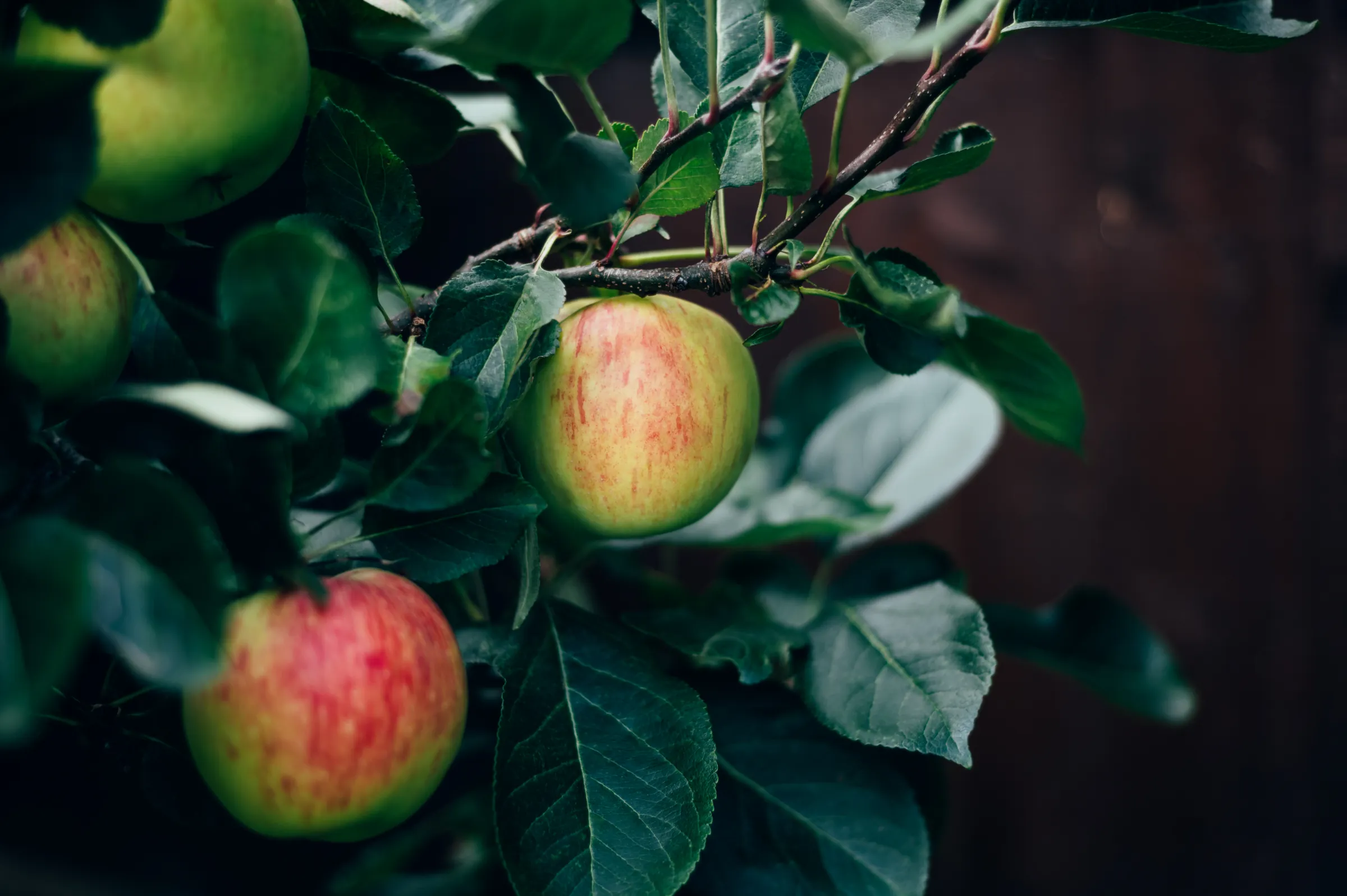
Italian Annurca apple
Malus pumila Mill. cv. Annurca
Flagship botanical
A leading hair-loss-defense botanical, native to the subtropical southeastern United States; a water-extracted berry extract standardized to 45% free fatty acids.
To talk about male-pattern hair loss, there is one name you cannot avoid: DHT (dihydrotestosterone). It is the factor most closely associated with pattern hair loss — including what is commonly called male-pattern and, in part, female-pattern hair loss. DHT affects the follicle, shortening the hair's growth phase cycle after cycle so that strands grow progressively finer and thinner. Pattern hair loss is also the most common type of hair loss in adults; precisely because so many people are affected, the question that really matters to most of them is how to address it safely and consistently.
Many ingredients work at this root, helping to counter DHT's effect on the follicle; but when it comes to the depth of the human research behind them, saw palmetto is one of the few natural ingredients in a class of its own. A pooled analysis of seven clinical studies (known academically as a systematic review) found that, after taking a saw palmetto–containing supplement, 60% of participants saw an overall improvement in hair quality, hair count rose by an average of 27%, 83.3% saw an increase in hair density, and 52% saw their hair loss stabilise (Evron 2020, Note 1). *Results vary from person to person.
One thing should be said up front: saw palmetto is not the most potent option. Its value lies in having accumulated the most human research, in being aimed squarely at the root, and in being gentle enough for everyday use. This article unpacks, layer by layer, its origins, the research behind it, and its safety boundaries.
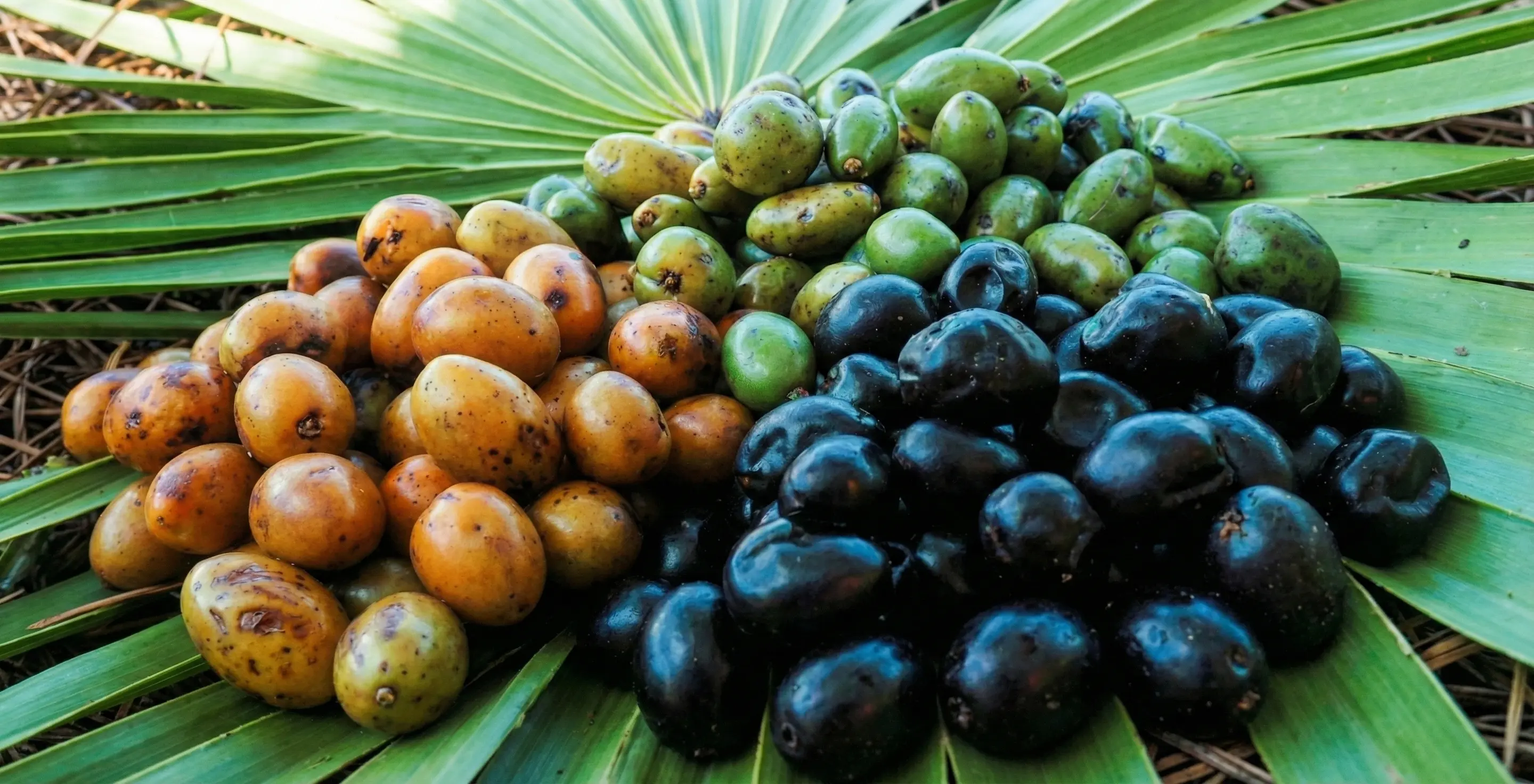
Saw palmetto (Serenoa repens) is a low-growing palm native to the subtropical southeastern United States (around Florida and Georgia); the part used is its dark berry. For centuries, indigenous peoples there used the fruit for everyday wellbeing; modern research has turned its focus to the sterols and free fatty acids in the berry.
The extract used in the Lemonvita HairBooster™ Gummies is a water-extracted saw palmetto berry extract standardised to 45% free fatty acids (FFA) — a white powder produced to the Chinese Pharmacopoeia 2020 quality standard (the most recent batch tested at 45.56% free fatty acids, with heavy metals well below limits and microbial indicators in compliance). One honest note here: the saw palmetto extracts used across the research are not all the same — some are high-concentration sterol versions made by supercritical CO₂ extraction, others are proprietary branded extracts. The water-extracted 45% FFA berry extract used in the Lemonvita HairBooster™ formula belongs to the same standardised category as these; where studies are cited below, the extract used is noted in each case.
Malus pumila Mill. cv. Annurca
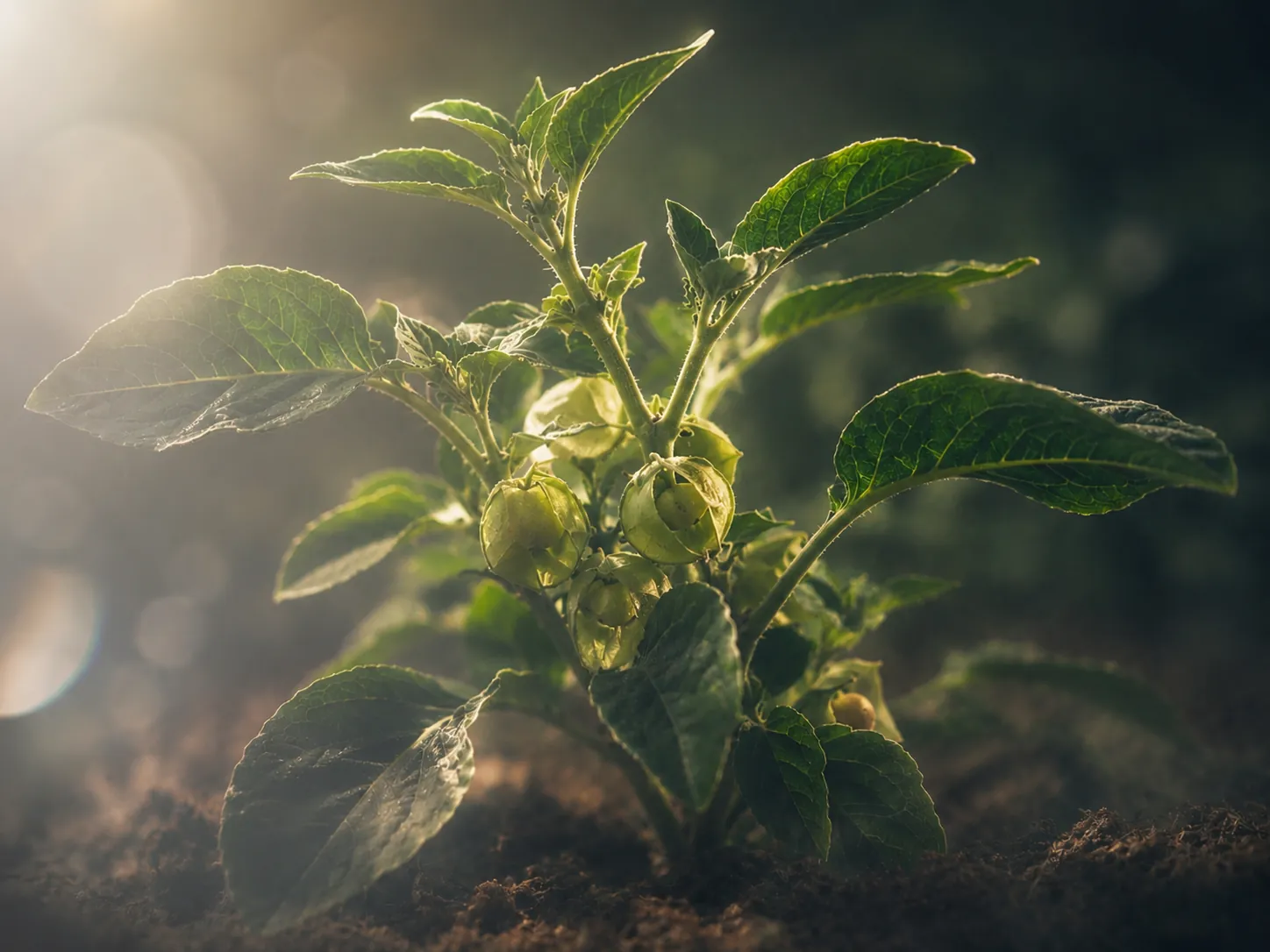
Withania somnifera
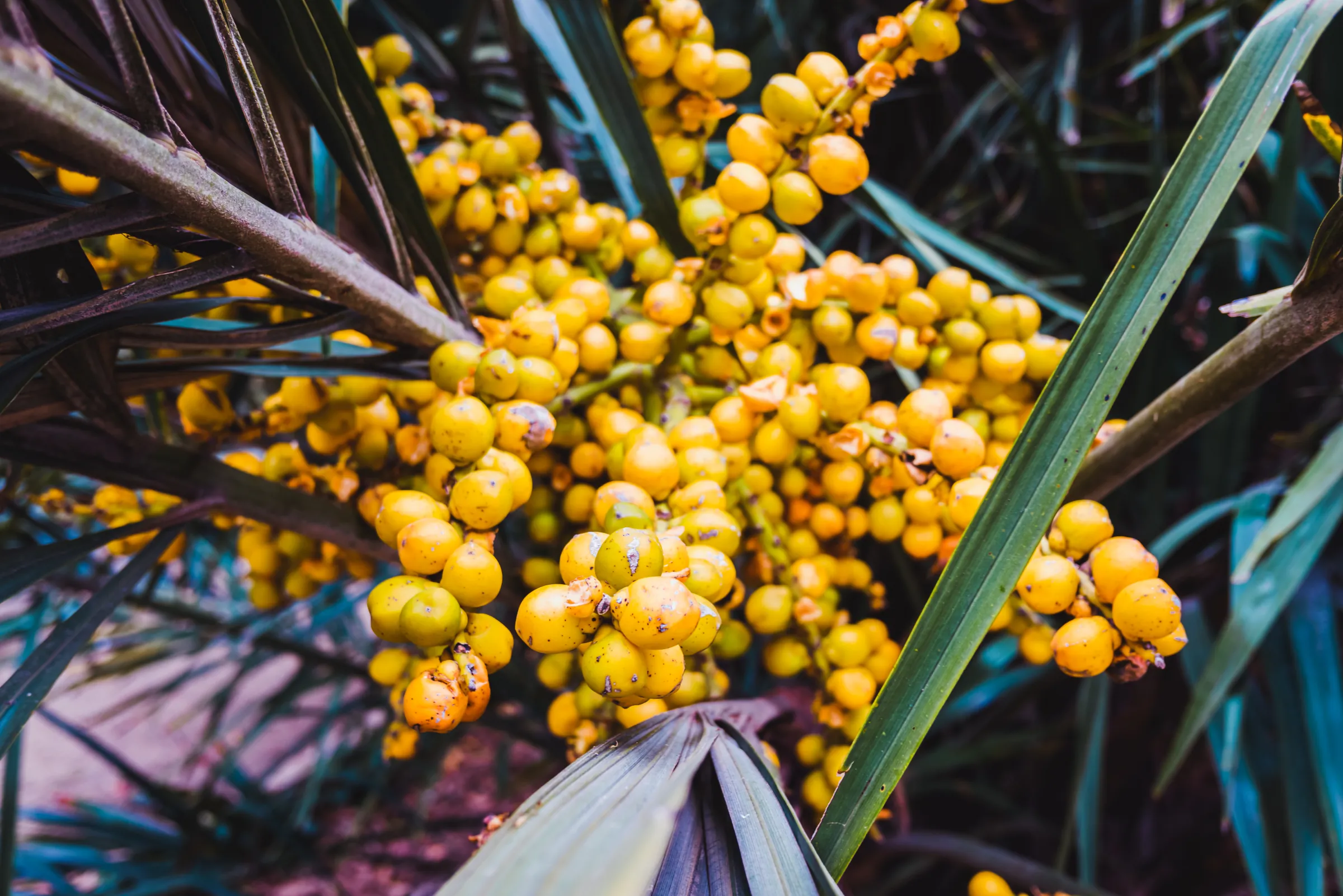
Elaeis guineensis Jacq.

Cucurbita pepo L.
Whatever the preparation, the real active core of saw palmetto is this group of sterols and free fatty acids (including lauric, oleic and myristic acids) — which is exactly what the "45% FFA" standard targets. Standardising the free-fatty-acid content matters because it keeps the active core of every batch at a predictable level, rather than leaving it to the batch-to-batch variation of a natural agricultural product.
The story of hair loss begins with DHT. What is called "miniaturisation" is a gradual process: a healthy follicle spends most of its time in a growth phase lasting several years, and DHT's effect is to shorten that growth phase step by step, so that with each cycle the follicle shrinks and thins a little more — until the strand is as fine as down and can no longer cover the scalp. To work at the source, countering this effect of DHT on the follicle, is to put a brake on that process — and this is the role of saw palmetto that has drawn the most research attention. *Results vary from person to person.
Recent research suggests that saw palmetto's hair-care potential may extend beyond the single line of countering DHT. A study using human hair follicle organ culture (follicles grown in a laboratory setting) observed that a saw palmetto extract helped follicles enter and stay in the growth phase, and at lower concentrations supported the activity of the cells at the follicle base (the matrix) (Broadley 2025, ex vivo human hair follicle). It should be noted that this is an ex vivo model using a proprietary branded extract, and is not directly equivalent to the effect of an oral whole extract; but it adds another layer of understanding to saw palmetto's role in hair care.
That said, the word "gentle" has to come first: as a food-grade botanical, saw palmetto works gently and gradually — it is not the fastest-acting option. This is at once the reason its effect is milder and the reason it tends to be better tolerated. And that makes it better suited to a daily routine you can sustain over the long term than to a short-term sprint — for anyone who needs to "hold the line", sustainability is itself a kind of value. Its real persuasiveness has never rested on any single dramatic number, but on the breadth that follows.
What truly sets saw palmetto apart is not any one astonishing figure, but the breadth and consistency of the evidence. That breadth matters because it comes from repeated verification across different research teams, different extract preparations and different study populations — when the same conclusion recurs again and again under independent conditions, its credibility is far higher than that of any single eye-catching trial.
The most representative is the Evron 2020 analysis mentioned earlier: it pooled seven studies (five randomised controlled trials and two long-term follow-up cohort studies), with oral doses ranging from 100 to 320 mg per day, and reported an overall 60% improvement in hair quality, a 27% increase in hair count, an increase in hair density in 83.3% of participants, and stabilisation of hair loss in 52% — with good tolerability across the studies. This too is a pooled result across several extract preparations (see Note 1), best understood at the level of "saw palmetto as a class of ingredient".
Overall hair-quality improvement
60%
Hair count increase
27%
Hair density increase
83.3%
Hair loss stabilised
52%
An earlier, foundational study comes from Prager 2002, a double-blind placebo-controlled trial: using a combination of saw palmetto with β-sitosterol, it reported a 60% improvement rate in pattern hair loss. The study was small (n=26), used a combination formula (so the effect cannot be attributed to saw palmetto alone), and is older — but it was among the first to verify a botanical hair-care ingredient by randomised controlled methods. *Results vary from person to person.
From pooled analyses back to individual rigorous trials, two studies are worth a closer look.
The first is Sudeep 2023: a 16-week randomised placebo-controlled trial in 80 people taking 400 mg of saw palmetto extract daily, which found hair fall reduced by 29% (P<0.001) and hair density up 5.17% (P<0.001). To be stated plainly: this trial used a branded sterol extract made by supercritical CO₂ extraction (free fatty acids as high as 85–95%), which is a different extract category from the water-extracted 45% FFA berry used in the Lemonvita HairBooster™ formula (Note 2); the measurement point was at 16 weeks of use.
The second is Rossi 2012, a rare long-term study: 100 men took 320 mg of saw palmetto daily for 24 consecutive months, and the study recorded that some participants' hair count improved or was maintained. This trial used a standard 320 mg saw palmetto extract — closer to the reality of an ordinary berry extract than a proprietary branded preparation — and its two-year span fills in the "long-term use" piece. One short and one long, the two studies each add corroboration to saw palmetto's oral effect from a different angle. *Results vary from person to person.
Saw palmetto has another uncommon trait: its human data covers both men and women. That is unusual — the vast majority of hair-loss studies recruit only men, so data that also includes women, and even looks closely at a post-menopausal subgroup, is especially rare. The causes of hair loss in women tend to be more varied, and targeted options have always been relatively scarce; a natural ingredient that holds human data for both men and women is especially meaningful for the women that hair-loss research has long overlooked.
There is also a randomised double-blind placebo-controlled study in 60 people (40 on the active, 20 on placebo, evenly split between men and women), reported at two timepoints: a 90-day interim analysis found the active group already ahead of placebo on terminal hair count (Ablon 2025), and by day 180 the active group was significantly better than placebo on each primary endpoint (including terminal hair count and hair density), with a separate analysis of the post-menopausal subgroup (Ablon 2026). Again to be stated honestly: this study used a highly potentiated proprietary branded extract, whose striking effect sizes are "least suited to direct extrapolation" to an ordinary berry extract. It is cited here to support the breadth of "human data for both men and women", not to treat its numbers as a general effect.
Pulling the lens back further, saw palmetto also appears in the "network meta-analyses" of hair-loss research (a statistical method that places many studies side by side and compares them). In one meta-analysis of dietary supplements, saw palmetto ranked above placebo on physician-assessed outcomes (Zhou 2025) — and few natural ingredients accumulate enough data to be included in this kind of formal comparison at all. A systematic review, multiple randomised controlled trials, a network meta-analysis, and data spanning men and women — this "breadth times consistency" is the real foundation of saw palmetto among natural hair-care ingredients. *Results vary from person to person.
Across multiple clinical trials, saw palmetto is generally well tolerated, with mild gastrointestinal discomfort being the most common complaint. The raw material used in the Lemonvita HairBooster™ formula is food-grade, with heavy-metal and microbial indicators far better than the required limits, and a shelf life of about 24 months.
But one point must be said clearly and honestly: as a matter of caution, saw palmetto is not suitable for pregnant women, women planning to conceive, or those who are breastfeeding, and it is not recommended for minors. This is not a routine disclaimer but a safety boundary that deserves respect. In addition, anyone taking anticoagulant or antiplatelet medication should seek professional advice before combining it, as saw palmetto carries mild antiplatelet activity.
Saw palmetto's persuasiveness has never rested on any single largest number — in fact, the most eye-catching figures tend to come from highly potentiated proprietary extracts rather than from an ordinary berry extract. Its real foundation lies in the whole package: working at the root of hair loss to counter DHT's effect on the follicle, the deepest and most consistent body of human research, suitability for both men and women, and being gentle enough for everyday use. Put another way, its strength is not that any one metric stands out, but that it has almost no obvious weak point — the role holds up, the evidence runs deep, the population covered is broad, and the safety boundaries are clearly stated.
It never pretends to be the most potent option. As a gentle choice for a daily routine, it is among the most thoroughly researched and most honestly positioned ingredients in the natural hair-care field. For anyone who takes their hair seriously and prefers a gentle, plant-derived source, this evidence-grounded steadiness may be exactly what makes it most worthy of trust.
Notes
Important Note
Saw palmetto berry extract is a nutritional supplement ingredient, not a medicine; it cannot replace formal medical treatment, and its effects should not be equated with those of a medical treatment. This kind of supplement is better suited to people in the mild-to-moderate stages of hair loss; if you are already at a more severe stage, the first choice should still be to seek professional medical help.
The following are extended research on saw palmetto and are not directly cited in the discussion above: