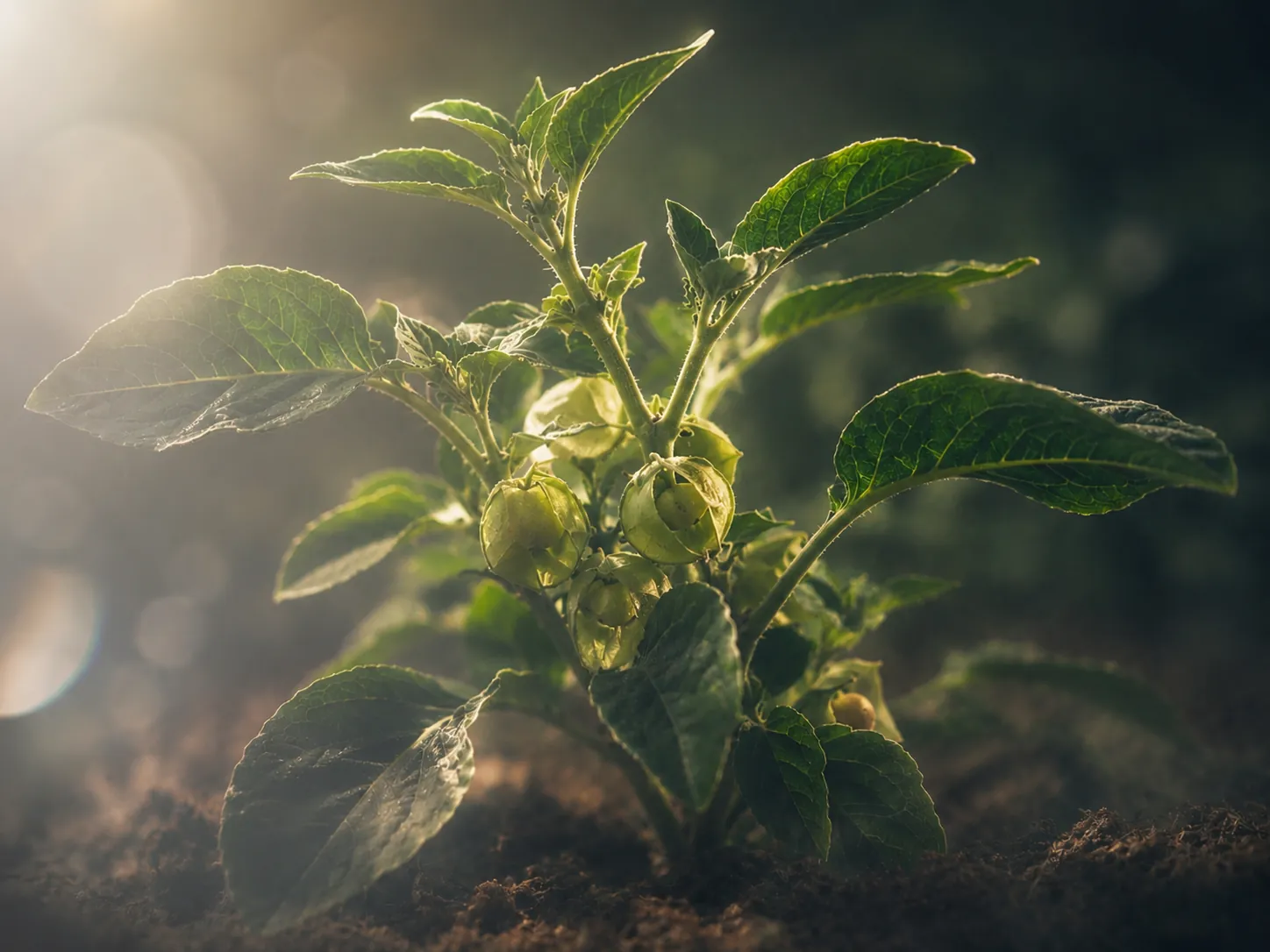
Ashwagandha
Withania somnifera
Flagship botanical
Grown in Southern Italy's volcanic soils, a water-extracted polyphenol concentrate rich in procyanidin B2, chlorogenic acid, and apple polyphenols — full-spectrum support across hair count, hair weight, and density.
118.3%. That is the increase in hair count recorded after participants in a clinical trial took an Annurca apple polyphenol extract for eight consecutive weeks (Tenore 2018) — which works out to roughly 19.4 additional hairs per square centimetre of scalp.
Eye-catching numbers are never in short supply in the hair-care market; what is scarce is human evidence that holds up. What makes the Annurca apple polyphenol extract unusual is precisely that it is not an isolated case: in a separate 180-day, placebo-controlled, randomised double-blind trial, the active group saw hair density rise 14%, shedding fall by as much as a third, and hair weight increase 34%, while the control group showed no significant change (De Biasio 2023).
In a field crowded with folklore and exaggeration, a carefully designed human trial is itself a kind of statement. Why does this apple from southern Italy deserve to be taken seriously? The answer lies not in any single magic number, but in layer upon layer of verifiable human and laboratory research.
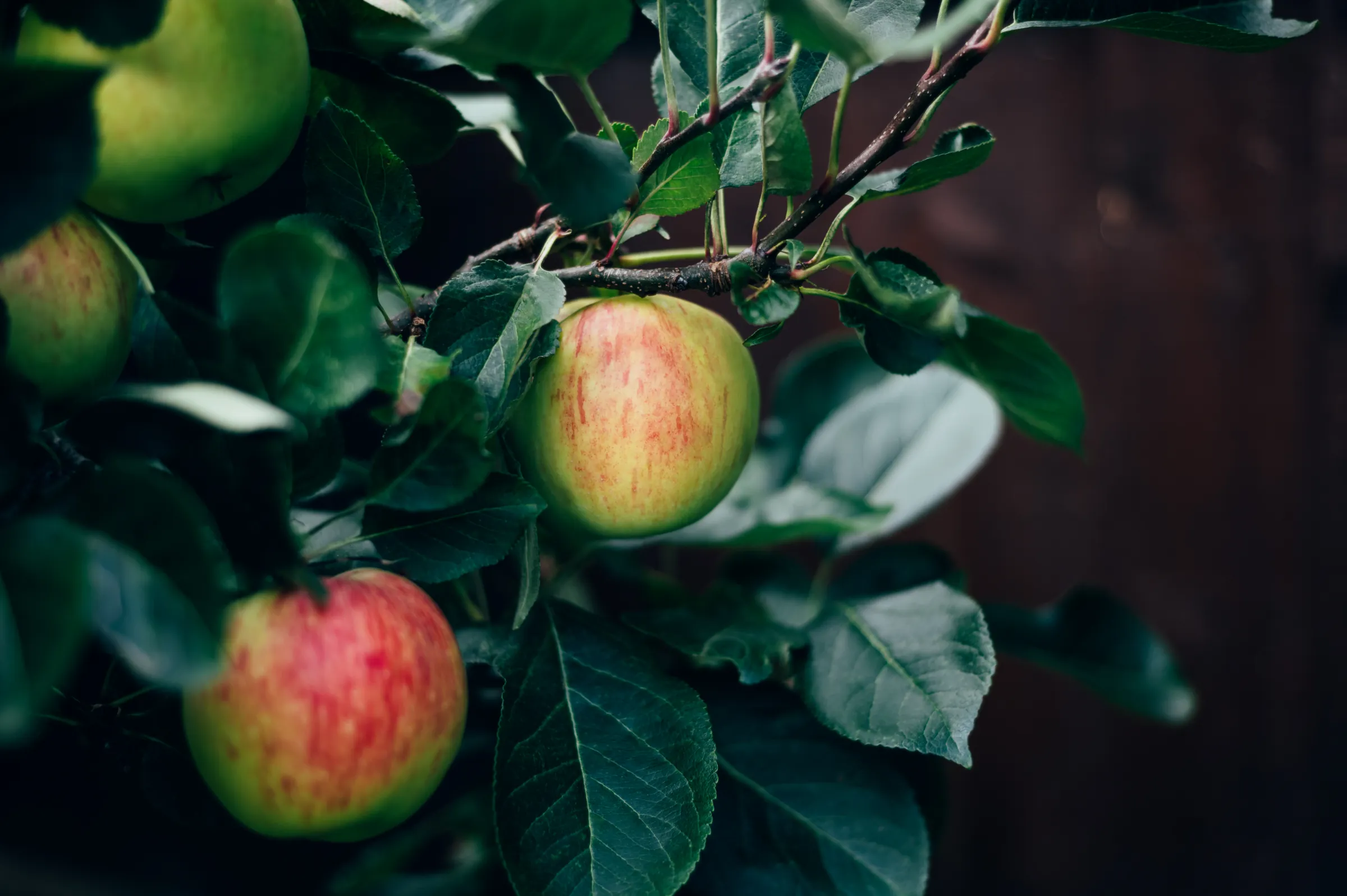
The Annurca apple (Malus pumila Miller cv Annurca) is not the everyday variety you find on a supermarket shelf. It grows in the Campania region of southern Italy, where a traditional post-harvest process known as "melaio" is used: after picking, the fruit is not eaten straight away but laid out on beds of straw to ripen and turn red off the tree over about a month — a step that markedly raises its active polyphenol content.
Its most notable trait is an exceptionally high content of procyanidin B2 — among the highest of any known apple variety. Extracts of this kind are usually taken from the whole fruit (skin and flesh, deseeded), drawn out with pure water and spray-dried into a powder, then characterised by polyphenol markers such as procyanidin B2, chlorogenic acid and total polyphenols.
It is worth stressing that the character of the Annurca apple comes not from a single molecule but from the coexistence of a group of complementary polyphenols. Alongside the most abundant procyanidin B2 and chlorogenic acid, the extract also contains catechin, epicatechin, phloridzin and other polyphenols, forming a complete plant complex. In hair care, people often fixate on one purified "star ingredient"; the research on the Annurca apple points the other way — it is precisely these polyphenols coexisting in natural proportion, each complementing the others, that give it a character distinct from anything aimed at a single isolated compound.
Withania somnifera
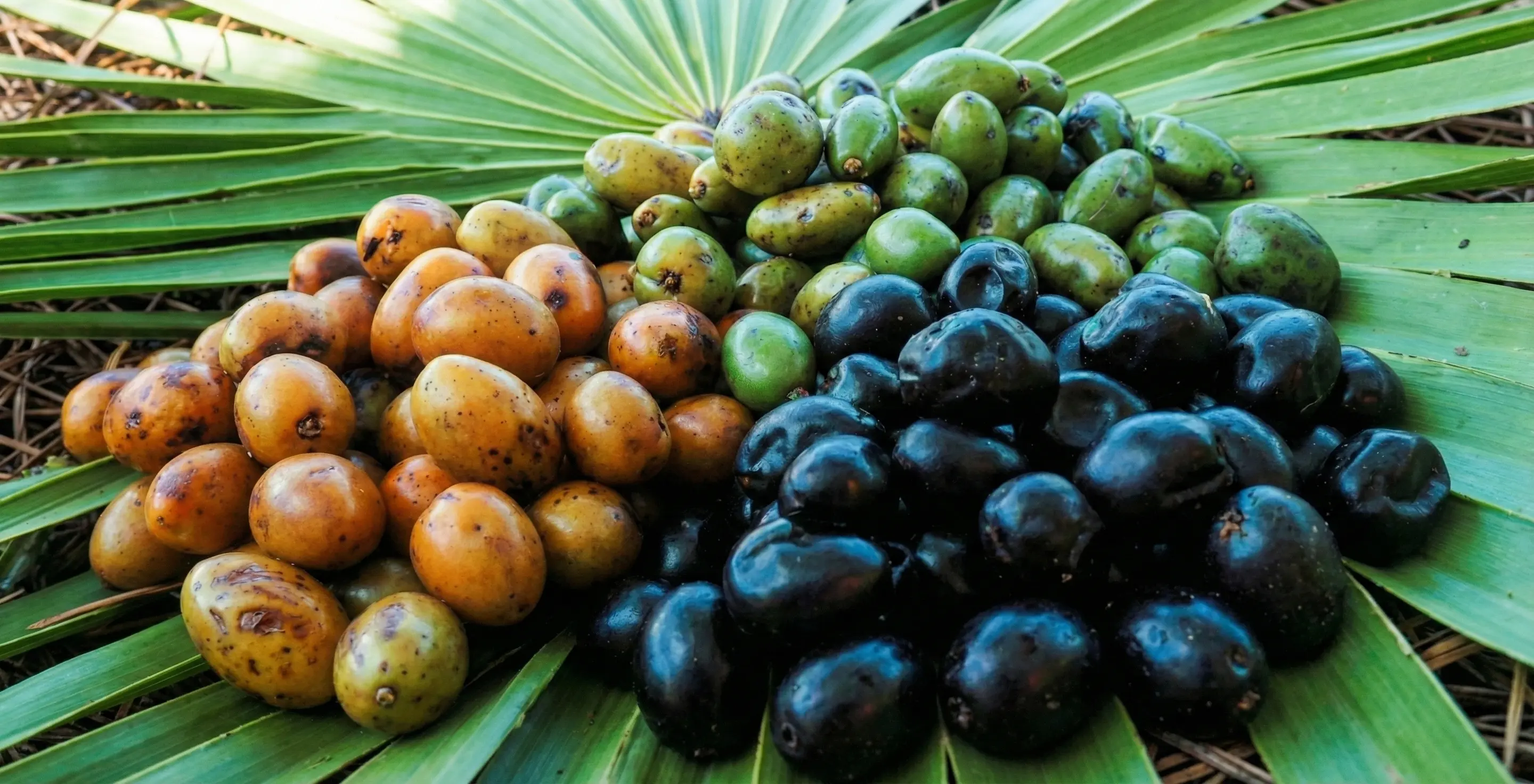
Serenoa repens (W. Bartram) Small
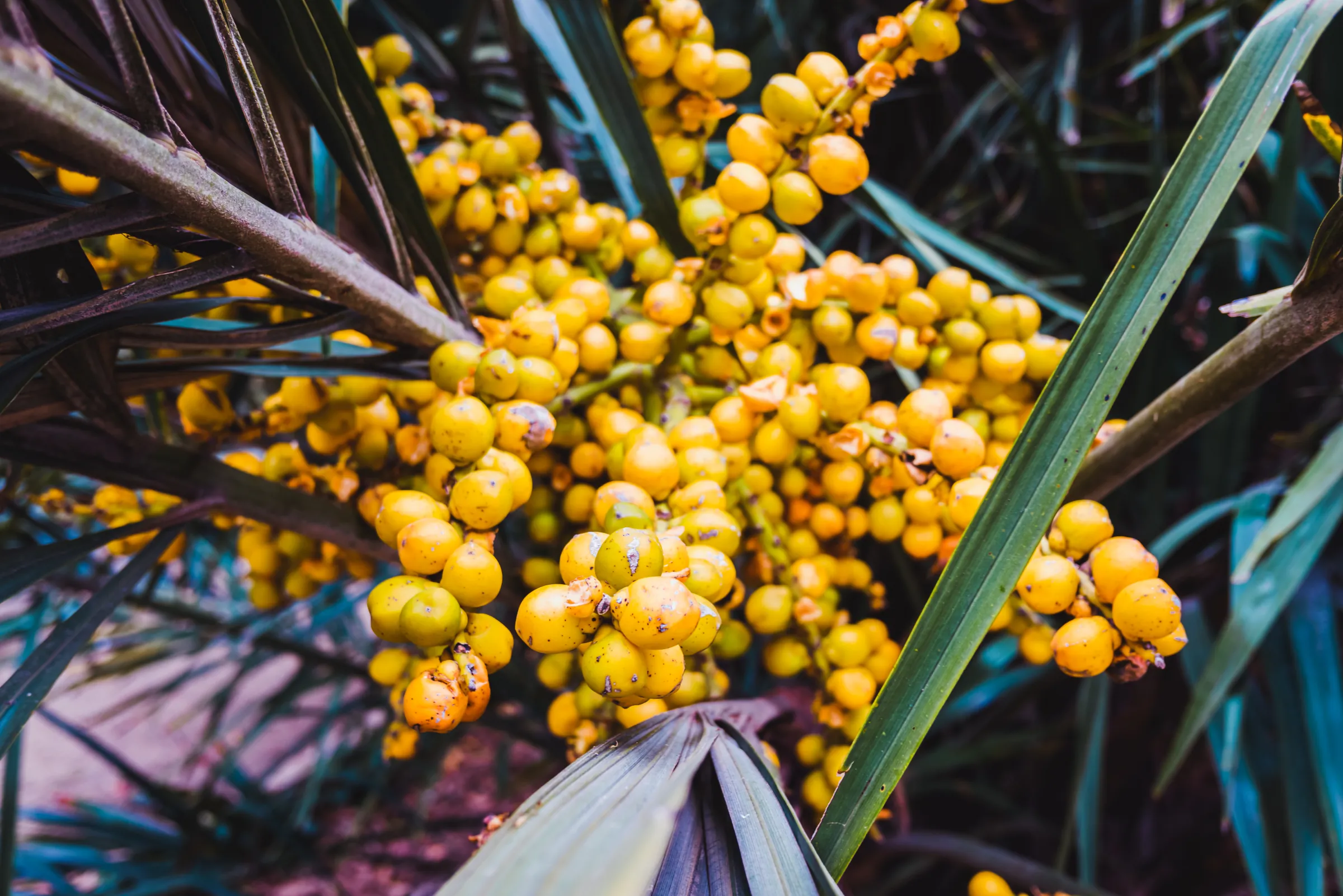
Elaeis guineensis Jacq.

Cucurbita pepo L.
Beyond the results of human trials, the Annurca apple has also accumulated a body of laboratory and animal-level research. These studies do not amount to proof of efficacy in humans, but they help explain why researchers have stayed interested in this apple. First, a basic fact: the life of a hair follows a "growth (anagen) — regression — resting" cycle, and hair loss often comes with a shortened growth phase and follicles entering the resting phase too early. The research directions below all revolve around this growth cycle.
The first is the hair growth phase (anagen). In cell and animal-model studies, procyanidin B2 was observed to promote the proliferation of hair epithelial cells (around 300% of control in cell studies) and to be associated with the initiation of the growth phase (Takahashi 1999; Kamimura 2002). It is worth noting that procyanidin B2, the marker compound of the Annurca apple, has also been studied at the human level — but only via the topical route: in double-blind trials lasting 4 to 12 months, topical procyanidin B2 significantly increased total hair count and hair diameter (P<0.001; Kamimura 2000; Takahashi 2001, 2005). It must be said that these were topical and used a single isolated compound, and are not equivalent to an oral whole-fruit extract — but they do show that this apple's core active has been examined at the level of the human hair follicle.
The second is keratin — the main structural protein of hair. In follicular-cell studies, Annurca apple polyphenols were observed to raise markers associated with keratin production (Badolati 2018; Piccolo 2019).
The third is antioxidant activity. The dermal papilla cells of the follicle are the key cells regulating hair growth, and oxidative stress affects how they function. In studies of follicular dermal papilla cells (in vitro), the Annurca apple extract was observed to show marked antioxidant activity (Benedetto 2024).
These research directions are each independent, and none can replace human evidence; but together they point to one thing: this apple is worth verifying with serious human trials. And what sets the Annurca apple apart is that it does, in fact, have such trials.
Back to that opening trial. De Biasio 2023 enrolled 80 people with male-pattern hair loss — half men, half women, aged 18 to 60 — randomly assigned one-to-one to an active group and a placebo group, taking 800 mg of extract daily for 180 consecutive days, followed by a 30-day follow-up after they stopped taking it; no one withdrew for any reason throughout.
The results were statistically significant (the P value for each interaction was below 0.001). At day 180, the active group's hair density rose 14%, shedding in the pull test fell 26%, shedding in the wash test fell by as much as 33%, and hair weight increased 34%; the placebo group showed no significant change at any time point. The pull test and wash test here simulate everyday shedding — the former gently pulls a bunch of hair and counts what comes away, the latter collects the hair shed during washing — two down-to-earth measures of hair loss. *Results vary from person to person.
What is more striking is how gradual and lasting the effect was. As early as day 60, density was up 7%, shedding down 13% and hair weight up 10%, deepening further at days 120 and 180; and even 30 days after stopping, the gains were largely maintained (density +12%, shedding −24% to −31%, hair weight +30%). This curve — climbing steadily, and not falling back the moment they stop taking it — is where the weight of the evidence lies.
| Hair density | Shedding | Hair weight | |
|---|---|---|---|
| Day 60 | +7% | −13% | +10% |
| Day 180 |
Beyond the numbers, the participants' subjective experience pointed in the same direction. At day 180, the proportion of the active group giving a "completely positive" rating left the placebo group far behind: 80% versus 33% felt their shedding had decreased, 85% versus 40% felt their hair was stronger, 85% versus 28% rated it positively overall, and 83% versus 23% said they would buy it for its effect (median test P<0.001 for each). Objective instrument data and participants' subjective experience advancing together is an important footnote to the credibility of the evidence.
Felt their shedding had decreased
80% (placebo 33%)
Felt their hair was stronger
85% (placebo 40%)
Rated it positively overall
85% (placebo 28%)
Would buy it for its effect
83% (placebo 23%)
Widening the view to the whole Annurca apple extract category, that eye-catching opening figure comes from a larger trial. Tenore 2018 enrolled 250 participants and ran an 8-week study using 800 mg per day of a different Annurca apple extract, recording a 118.3% increase in hair count — from 16.4 to 35.8 hairs per square centimetre, that is, 19.4 more hairs in real terms (P=0.001); at the same time, hair weight rose 37.3% and keratin content rose 35.7% (P=0.001).
This is an increase of more than double. It must be said honestly that it comes from a different extract preparation, also in the Annurca apple category, and so is best regarded as "extract-category level" supporting evidence — corroborating the placebo-controlled trial above: one substantial in scale with a striking increase, the other rigorous in design and lasting half a year. Taken together, the human evidence for the Annurca apple is no longer a single thin data point.
Beyond efficacy, tolerability is just as important when judging a daily supplement. In De Biasio 2023, neither the active nor the placebo group had any cases of erythema, oedema or inflammation; the very mild gastrointestinal discomfort that appeared in the active group was statistically no different from the placebo group (P values of 0.41 and 0.25 respectively); and no one withdrew from the trial due to an adverse reaction. As a food-grade polyphenol extract, its microbial and heavy-metal indicators meet European Pharmacopoeia standards, with a shelf life of about 36 months.
Back to the opening numbers. The 118.3% increase in hair count, the 14% rise in density and the roughly one-third drop in shedding over the 180-day trial — these are not isolated selling points, but different facets of the same story: an apple that, from the laboratory to human trials, has accumulated layer upon layer of verifiable research.
The persuasiveness of the Annurca apple polyphenol extract has never rested on any single isolated magic number, but on the completeness of laboratory research and human RCT findings echoing one another. It is a reminder that a hair-growth ingredient truly worth trusting is built not on a slogan, but on layer upon layer of verifiable evidence stacked together. For everyone who takes their hair seriously, this science-grounded steadiness may be the most important source of confidence of all.
Important Note
Annurca apple extract is a nutritional supplement ingredient, not a medicine; it cannot replace formal medical treatment, and its effects should not be equated with those of a medical treatment. This kind of supplement is better suited to people in the mild-to-moderate stages of hair loss; if you are already at a more severe stage, the first choice should still be to seek professional medical help.
| +14% |
| pull test −26% / wash test −33% |
| +34% |
| 30 days after stopping | +12% | −24% to −31% | +30% |
One more point worth noting: this evidence was not drawn from the general population — the participants themselves had male-pattern hair loss. In other words, the improvements above in hair density, shedding and hair weight were measured in the real-world situation of men experiencing hair loss. For anyone facing the causes of male hair loss, that makes it especially concrete.
This study used 800 mg of extract per day; the Lemonvita HairBooster™ Gummies use the same extract category (same cultivar, same fruit part, same water-extraction and drying system), and on the Intensive Dose (6 gummies per day) their Annurca apple amount approaches the dose range used in the relevant research. The evidence is best understood at the "extract-category level"; readers interested in the details and limitations of individual trials can verify them for themselves via the references at the end.
The following are extended research on the Annurca apple and are not directly cited in the discussion above: