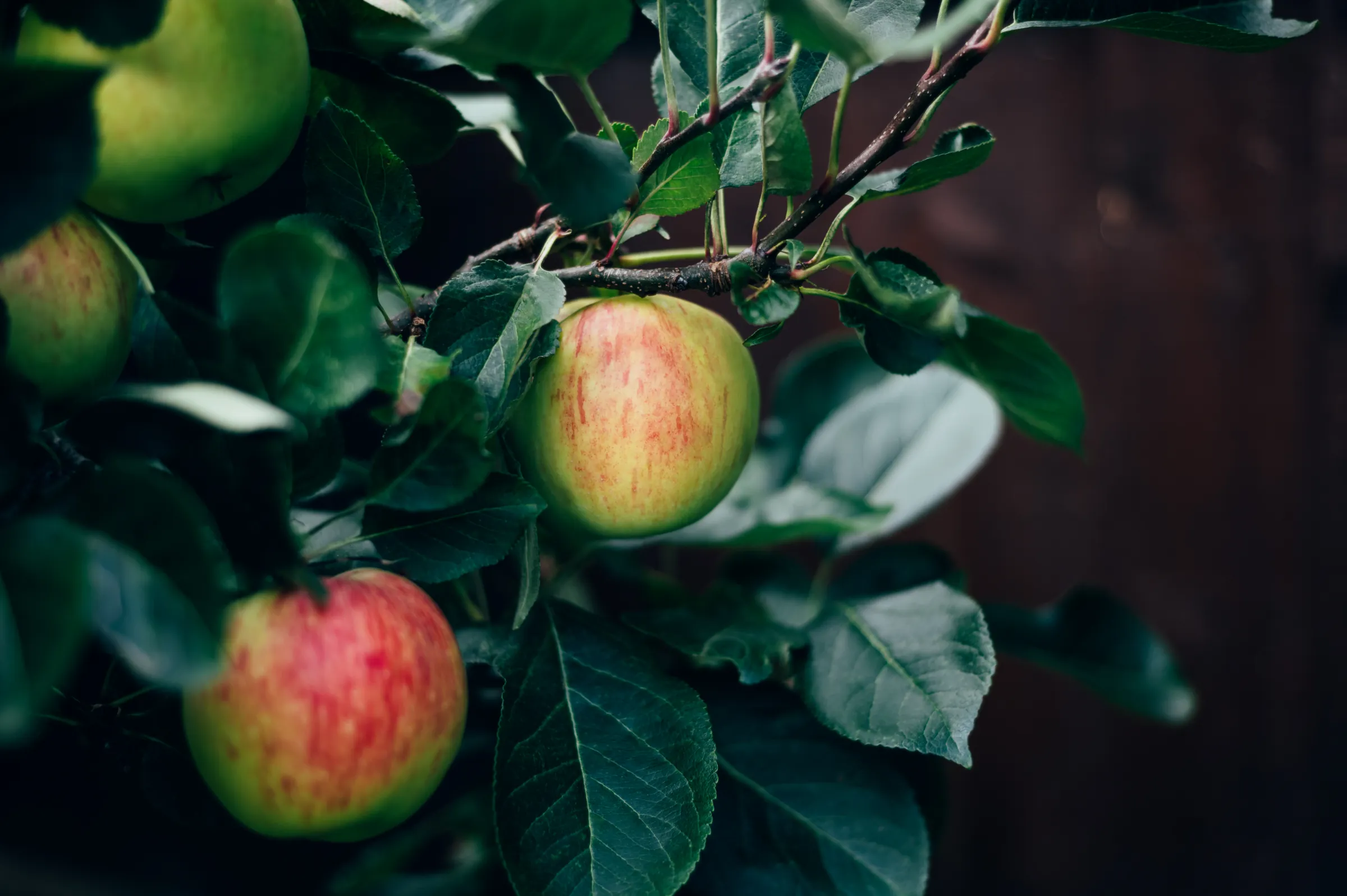
Italian Annurca apple
Malus pumila Mill. cv. Annurca
Flagship botanical
From the traditional Ayurvedic herbal tradition of India, a whole-herb standardized extract (≥5% withanolides) that improves stress resilience and sleep quality².
When hair loss strikes, most people think first of the scalp — of shampoos and follicles. But hair growth has never been only a matter of the scalp.
Hair moves through a cycle of "growth — shedding — rest". When a person is under prolonged stress and sleeping badly for a long stretch, that cycle can be quietly thrown off: more hairs slip early into the resting phase, and the strands left on the pillow, on the floor, in the drain begin, almost unnoticed, to multiply. Stress and sleep make up one of the most overlooked — yet very real — paths to hair loss.
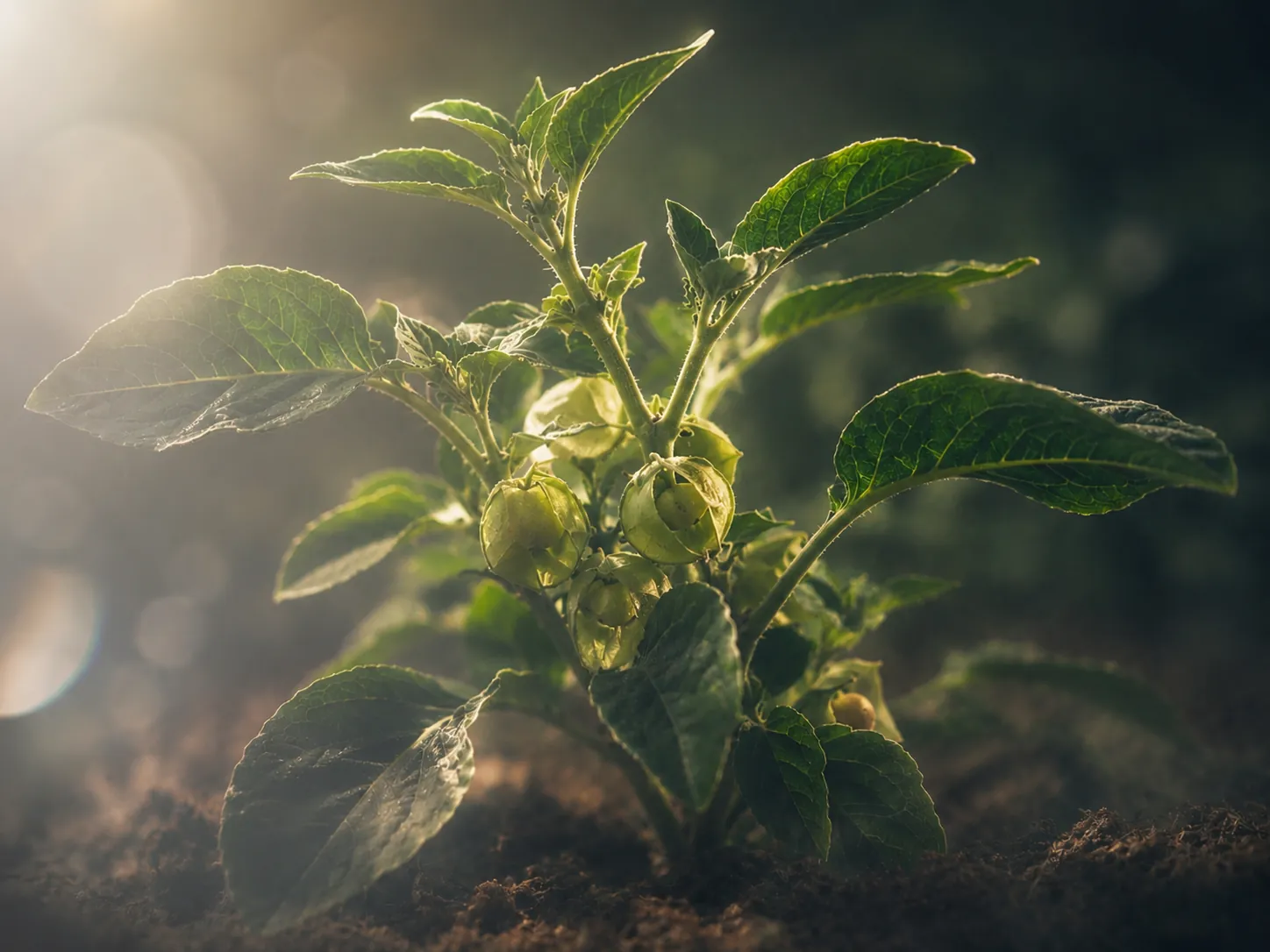
Ashwagandha (Withania somnifera) is one of the natural ingredients most repeatedly examined in stress and sleep research; and in recent years, that research has, for the first time, reached as far as hair itself.
To understand this path, you first have to understand the rhythm of hair growth. Every strand cycles through three phases: a growth phase (anagen — the follicle keeps producing hair, and it can last several years), a regression phase (a brief transition), and a resting phase (telogen — lasting several months, during which the old hair sheds, the follicle rests, and a new hair then grows in). Normally each hair keeps its own rhythm, so shedding a few dozen a day is perfectly ordinary.
The trouble comes when that rhythm is disrupted. There is a common type of shedding called telogen effluvium, caused by a large number of follicles being pushed into the resting phase at the same time. Stress, the aftermath of illness, poor nutrition, or large swings in sleep can all be triggers. Research notes that this kind of shedding often does not appear straight away, but surfaces gradually, around two to four months after the trigger (Asghar 2020).
That time lag is exactly why the link between stress and hair loss is so easily missed: by the time you notice your hair has visibly thinned, the stretch of late nights and pressure that set it off may already be two or three months behind you, which makes the two hard to connect. The relationship between stress, sleep, and shedding has in fact long been a subject of research interest (Hadshiew 2004).
Malus pumila Mill. cv. Annurca

Serenoa repens (W. Bartram) Small
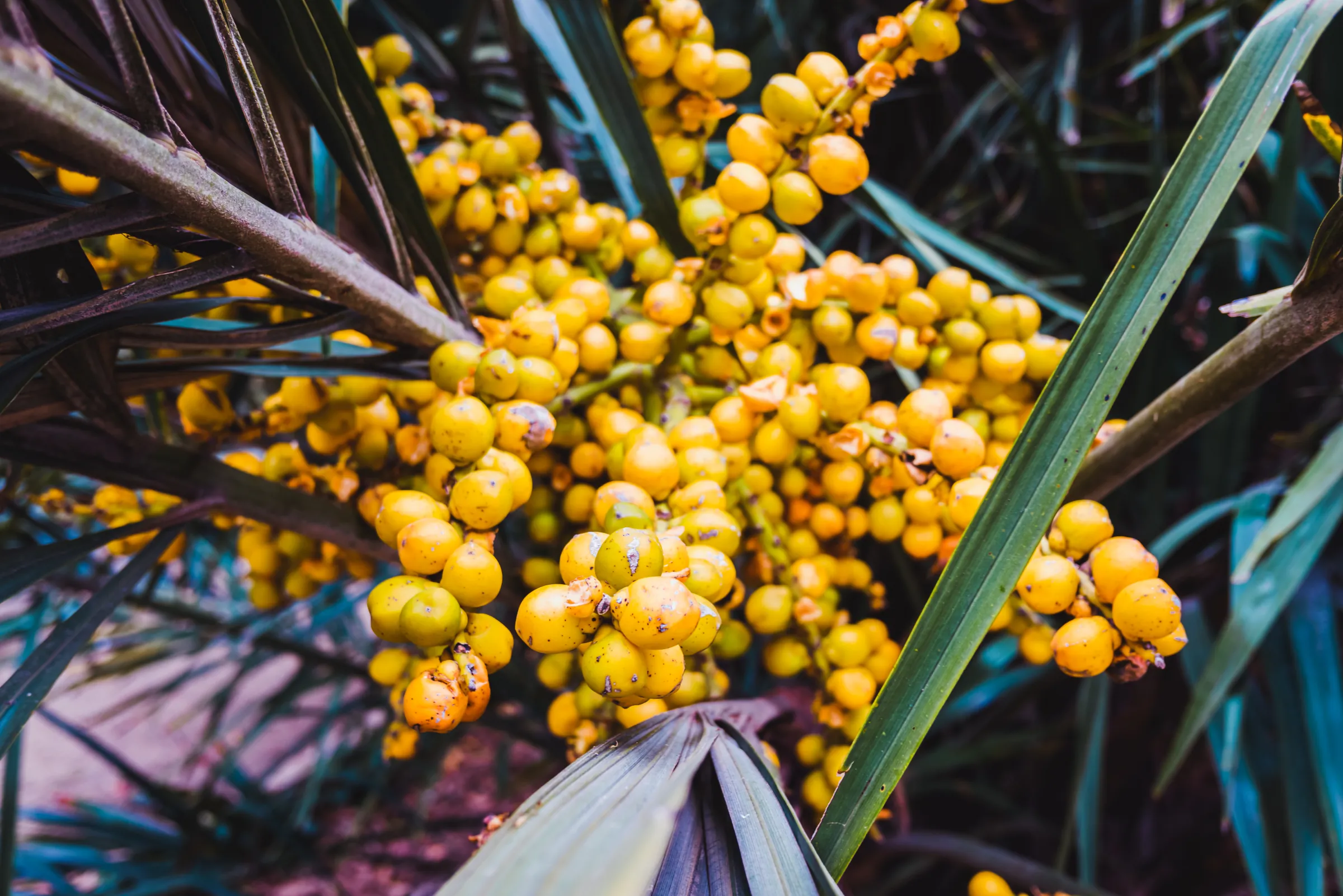
Elaeis guineensis Jacq.

Cucurbita pepo L.
Follow that logic, and a question arises naturally: if you could improve the state of your stress and your sleep, might you also create a more favourable environment for hair to grow?
Ashwagandha (Withania somnifera) is a herb rooted in the Ayurvedic tradition of India, often classed as an "adaptogen" — meaning a group of natural substances thought to help the body adapt to stress.
What stands out most about it is the sheer quantity of research. Among natural ingredients, ashwagandha is one of the few to have accumulated a large body of modern human research: the published randomised controlled trials (a study design with a placebo control and relatively high reliability) together cover more than a thousand participants. That density of human research is uncommon among natural plant ingredients.
As for the Lemonvita HairBooster™ Gummies, the formula likewise uses an ashwagandha extract (also Withania somnifera, standardised to 5% withanolides). But one thing should be said honestly: the research referred to in this article mostly uses root extracts, which differ in preparation from the whole-plant extract used in this product; the results of that research therefore do not directly represent the effect of this product. The studies cited below are here to set out the research background of this ingredient — not to claim that the product itself has been clinically validated.
Start with sleep. A pooled analysis of five randomised controlled trials, covering 400 participants in total (combining the data from several studies for joint analysis), found that the group taking ashwagandha had a statistically significant improvement in overall sleep quality; and the improvement was more marked among those with poorer sleep quality, on higher doses (600 mg a day or more), and over longer periods (8 weeks or more) (Cheah 2021). Another pooled analysis, covering five trials and 254 participants, reached a similar conclusion: time taken to fall asleep, total sleep time, and overall sleep quality all improved — but it also noted honestly that on individual measures, such as getting back to sleep after waking in the night, the two groups showed no clear difference (Fatima 2024). *Results vary from person to person.
Behind these analyses is a series of carefully designed trials. In one study of 150 people, for instance, participants who took an ashwagandha extract for six consecutive weeks rated their own sleep quality as improving by 72%, against 29% in the placebo group (Deshpande 2020); studies in older adults (Kelgane 2020) and in people with poor sleep quality (Langade 2019, 2021) likewise observed improvements in sleep; and a recent 200-person study once again confirmed its help with sleep (Movva 2026).
Now to stress. The research on ashwagandha and stress is equally substantial. Two pooled analyses — one covering 12 trials (more than a thousand participants, Akhgarjand 2022) and one covering 9 randomised controlled trials (558 participants, Arumugam 2024) — both observed that the group taking ashwagandha did better than the placebo group on stress-related assessments.
What makes research credible, though, is precisely that it presents the inconsistencies honestly. The differences between the studies above are in fact not small (that is, the results of different trials do not entirely agree); a recent analysis covering 14 trials also noted that the literature may carry a "publication bias" (positive results being easier to publish), and rated the overall level of evidence as on the low side (Marchi 2025). Individual trials have produced "no clear difference" results too: one study in university students, for example, found that although some measures improved, the difference between the two groups on the stress scale was not significant (O'Connor 2022). On top of that, most existing trials are funded by the makers of the relevant extracts, and are concentrated in the hands of a small number of research teams — all of which is background that should be weighed when reading this kind of research.
If stress and sleep really do affect hair, then the most direct question is this: taken orally, can ashwagandha actually produce a measurable change at the endpoint that is hair itself?
For a long time there was no direct answer — almost all the human research on ashwagandha concentrated on stress and sleep, not on hair. Only recently did the first randomised, double-blind, placebo-controlled trial of oral ashwagandha using hair as a measured endpoint appear: after participants took it for 75 consecutive days, the active group's improvements on several instrument-measured hair indicators (including hair density, growth, and the ratio of growth-phase to resting-phase hairs) were clearly greater than the placebo group's; no adverse reactions were recorded during the trial (Jillella 2026). *Results vary from person to person.
This is a beginning worth noting, but its limits must be marked just as honestly: it is only a single, fairly recent study, using a branded root extract (different in preparation from a whole-plant extract), with generally healthy participants, and with the hair indicators making up only one part of the overall study design. In other words, it offers the first piece of direct human evidence for the idea that "oral ashwagandha may help hair" — but it is still only a starting point, better treated as corroborating evidence than as a settled conclusion.
It is also worth mentioning that the same extract had earlier been studied in humans by the topical route, recording improvements in hair density, growth and hair diameter (Yerram 2023). But topical and oral are not the same, so what this reflects is the connection between this ingredient and the follicle — not the effect of taking it orally.
Put all the research above side by side, and what makes ashwagandha distinctive is not any one eye-catching number, but that across the two domains of stress and sleep it has built a base of human research rarely seen among natural ingredients — and that this line of research has, in recent years, reached hair itself for the first time.
Sleep pooled analysis (Cheah 2021)
5 randomised controlled trials · 400 participants
Stress pooled analysis (Akhgarjand 2022)
12 trials · over 1,000 participants
Stress pooled analysis (Arumugam 2024)
9 randomised controlled trials · 558 participants
First direct hair study (Jillella 2026)
Oral, randomised, double-blind, placebo-controlled · 75 days
Just as important, though, is seeing its limits clearly. Research has found that different preparations of ashwagandha extract can differ considerably in how well the body absorbs them (Kim 2023) — in other words, the form and quality of the extract is itself a variable. Add the points raised earlier — that much of the research is funded by manufacturers, is concentrated among a few teams, and that research aimed directly at hair is still at an early stage — and all of it is a reminder that treating ashwagandha as "one of many ingredients with research behind it" sits closer to the truth than treating it as a "miracle fix".
Beyond efficacy, tolerability is an important part of judging any daily supplement. Across multiple short-term studies in healthy adults, oral ashwagandha extract is generally well tolerated. It is not, however, suitable for everyone: pregnant women, women who are breastfeeding, people with existing liver, thyroid or autoimmune conditions, and anyone taking related medication should seek professional medical advice before use.
Back to the question we started with: hair growth has never been only a matter of the scalp.
The value of ashwagandha lies not in one striking number, but in a whole body of human research — in sleep, in stress, and now, for the first time, in hair itself — and the weight that body of work has built up. The path it takes is a different one: not starting from the scalp, but from the underlying conditions that let hair grow undisturbed.
For everyone who takes their hair seriously, and takes the rhythm of their life seriously too, this grounded steadiness — beginning from stress and sleep — may be another kind of confidence worth taking seriously.
Important Note
Ashwagandha extract is a nutritional supplement ingredient, not a medicine; it cannot replace formal medical treatment, and its effects should not be equated with those of a medical treatment. This kind of supplement is better suited to people in the mild-to-moderate stages of hair loss; if you are already at a more severe stage, the first choice should still be to seek professional medical help. In addition, this product is not intended to diagnose, treat, or prevent any sleep- or mood-related disorders; if you are troubled by concerns of that kind, you should seek professional medical advice.
The following are extended research on ashwagandha and are not directly cited in the discussion above: