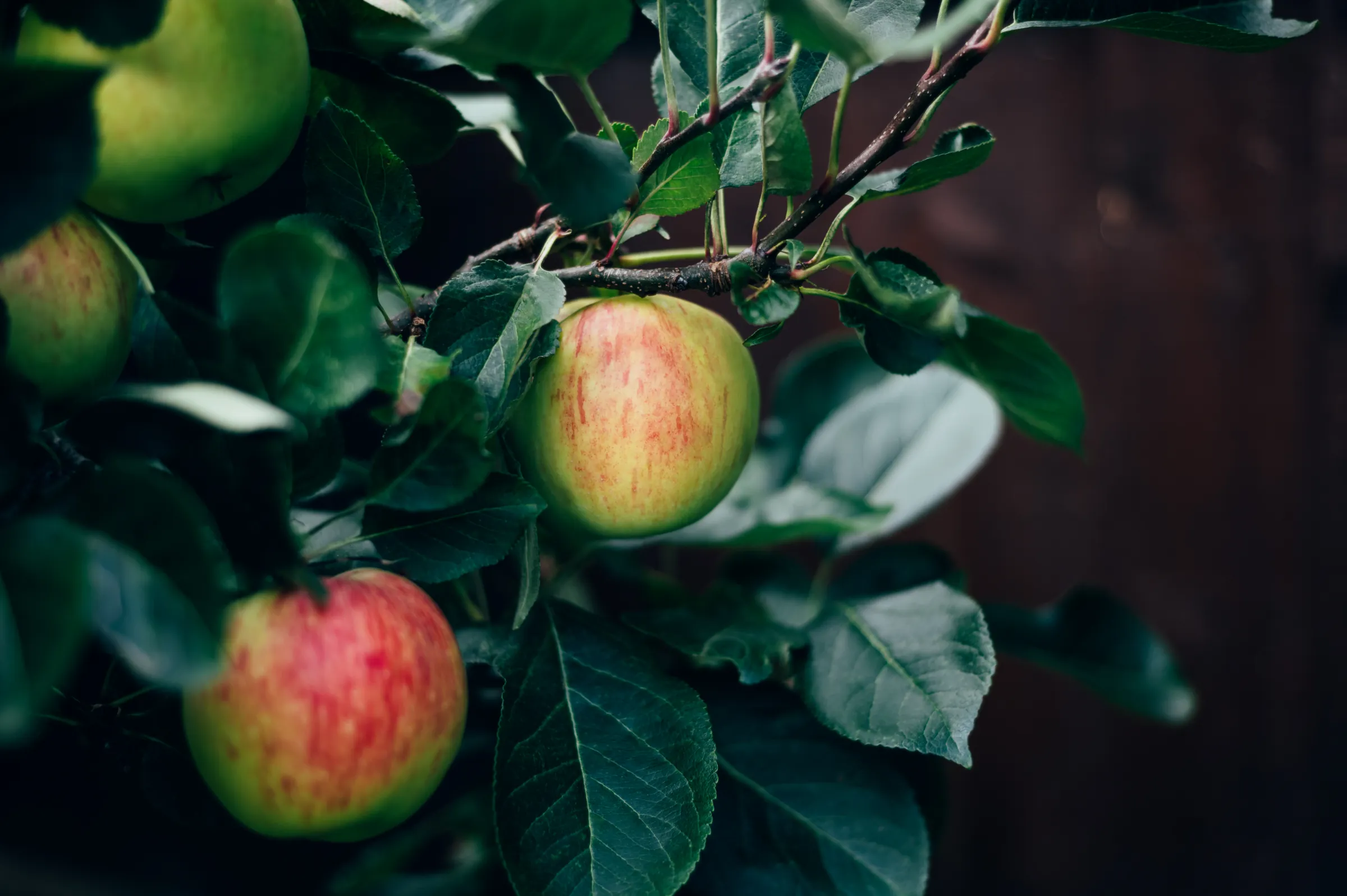
Italian Annurca apple
Malus pumila Mill. cv. Annurca
Specialized botanical
A 20:1 pumpkin seed concentrate standardised to β-sitosterol — the most-researched phytosterol, associated with countering the challenge of DHT-related hair loss².
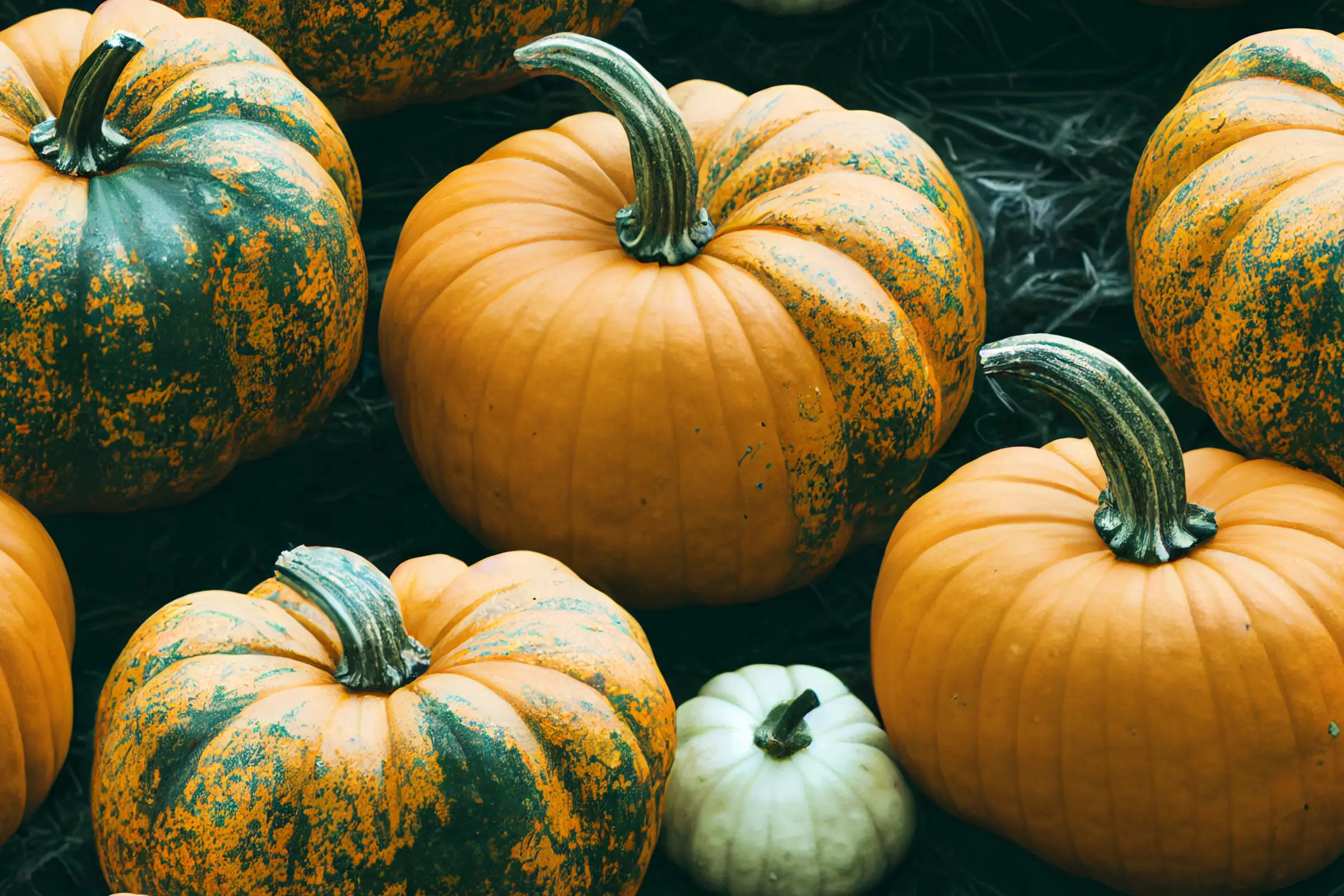
Pumpkin seed is an everyday snack, and a common pantry ingredient in many kitchens. Yet in the research on hair growth and hair-loss prevention, this small seed turns up again and again — which is, in itself, a rather unusual thing.
Let's say it plainly up front: pumpkin seed has no single overwhelming "magic number." But that is exactly what makes it worth a closer look. The evidence around pumpkin seed is not one lone trial, but four independent lines — its most-researched core component, human clinical trials conducted directly on people, a pooled analysis that gathers many studies together for comparison, and its performance within multi-ingredient formulas — and all four lines point in the same direction.
Two examples. In one human trial, after participants took pumpkin seed (oil) for 24 consecutive weeks, hair count rose by 40% (Cho 2014). And in a separate analysis comparing a range of dietary supplements side by side, pumpkin seed ranked first among them all on a physician-assessed measure (Zhou 2025). *Results vary from person to person.
When several independent lines of evidence echo one another, their credibility tends to be higher than that of any single eye-catching number. And pumpkin seed's character — well-rounded, and particularly well suited to being placed in a formula — fits precisely the design thinking behind the Lemonvita HairBooster™ Gummies. Below, we take these four lines one at a time.
The pumpkin we commonly eat, Cucurbita pepo, is native to North America and now widely cultivated worldwide; the part used in hair-growth research is its seed.
HairBooster uses a pumpkin seed 20:1 concentrated extract — pumpkin seed concentrated about twentyfold into a dry powder, standardised to one of its key phytosterols, β-sitosterol, as the quality marker. Phytosterols are a class of compounds that occur naturally in plants; and β-sitosterol is precisely the most-researched active core in pumpkin seed hair research.
One honest note here, and it runs through the whole article: most pumpkin seed hair-growth research on the market uses pumpkin seed oil, whereas HairBooster uses a dry-powder concentrated extract — both come from the pumpkin's seed, but their physical form is not the same. So each time a study below uses "oil," it will be noted plainly; and these figures are best read at the level of "the components of the pumpkin-seed plant," rather than equated directly with the effect of any one form. Discussing "pumpkin seed" and "β-sitosterol" separately, then seeing how the two connect, is the key to reading this research properly.
Malus pumila Mill. cv. Annurca
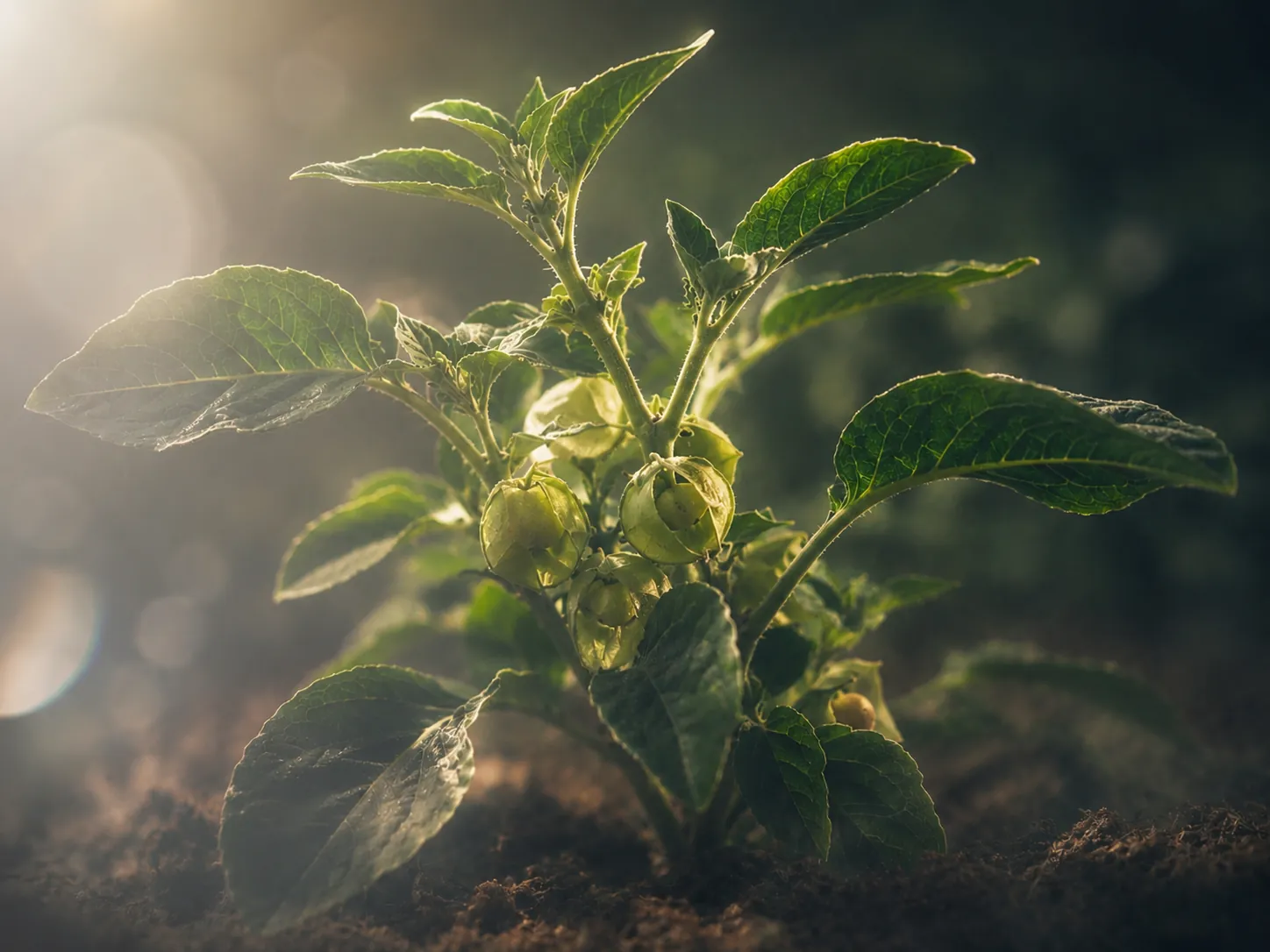
Withania somnifera
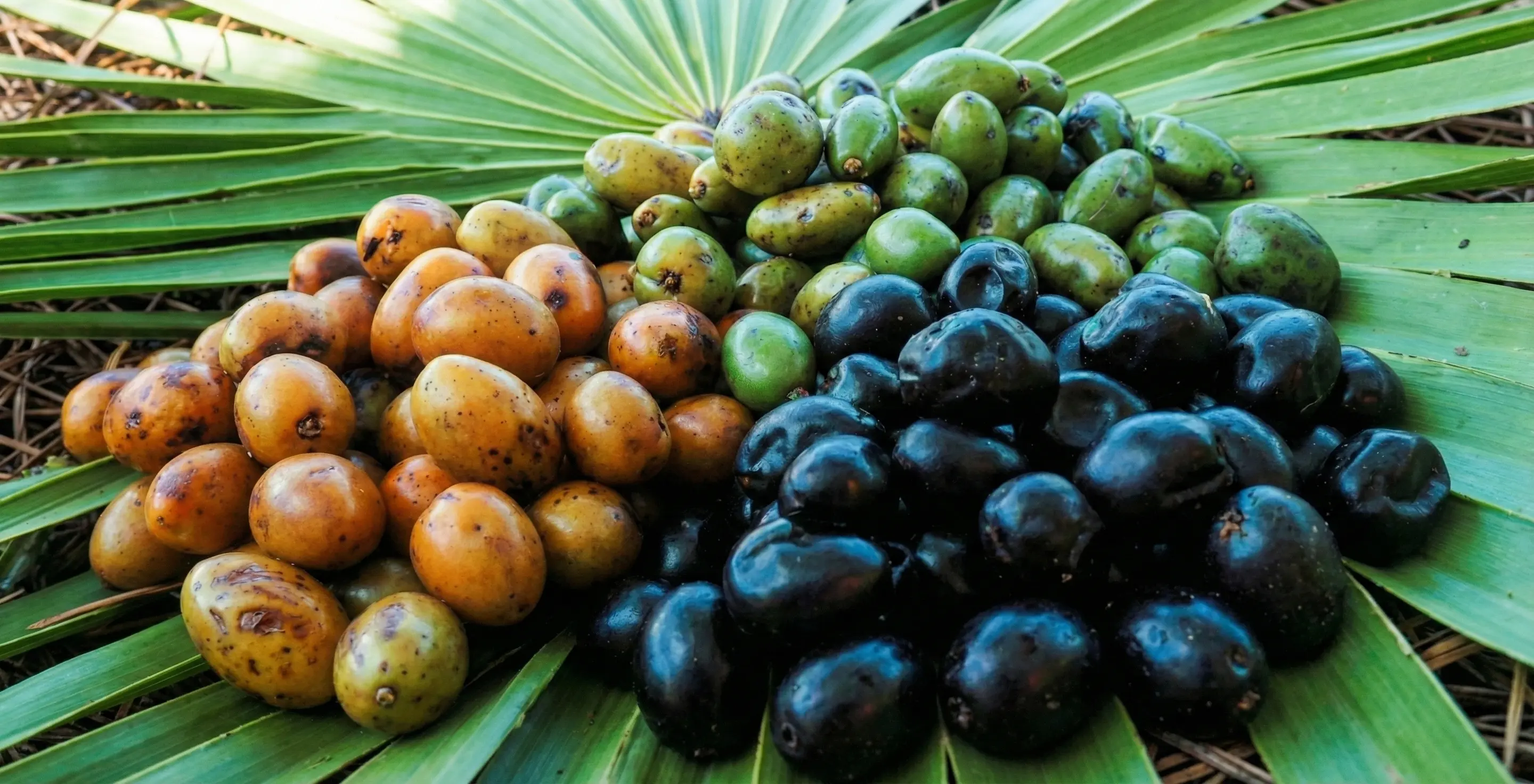
Serenoa repens (W. Bartram) Small
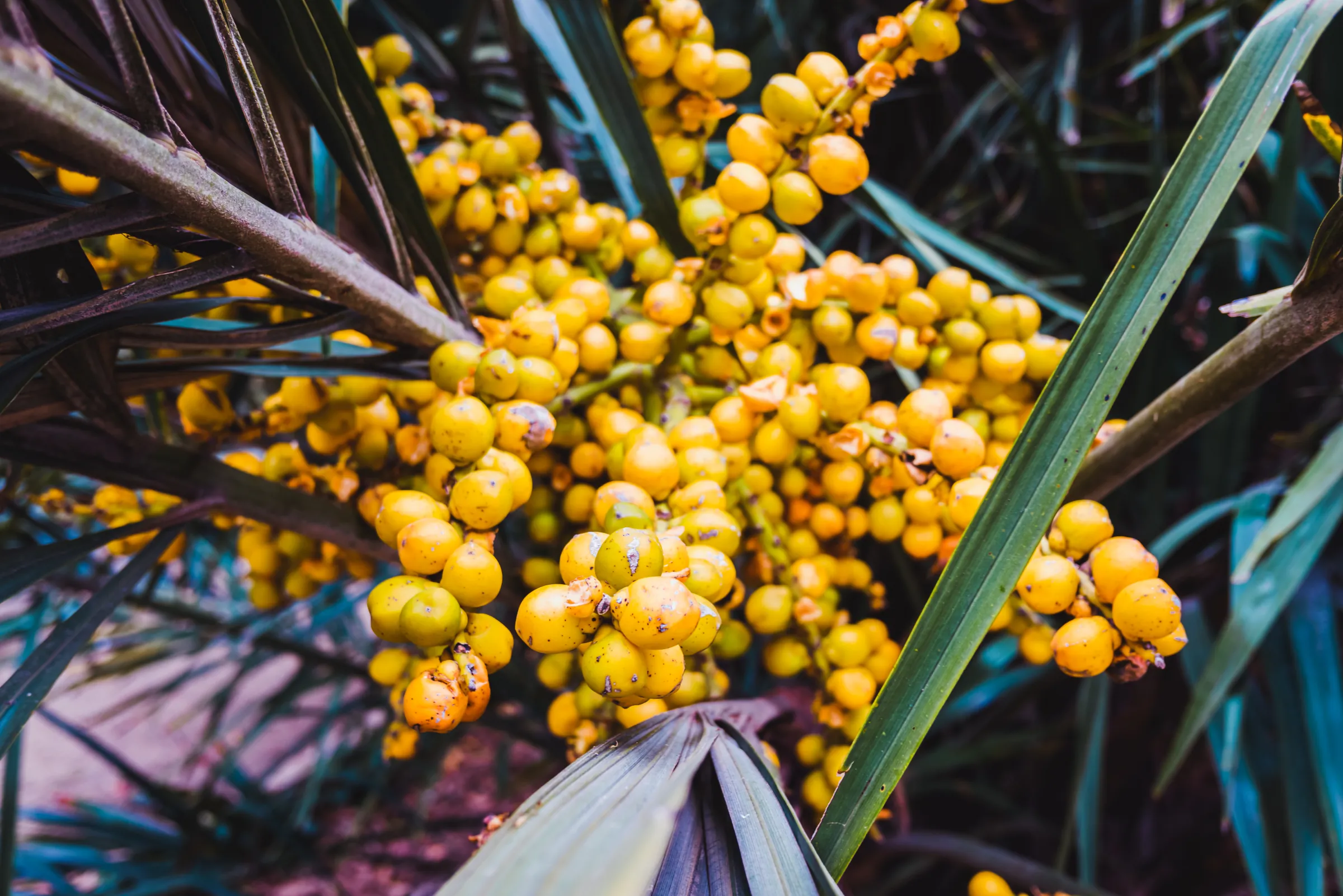
Elaeis guineensis Jacq.
To understand pumpkin seed's research value, you first need to know about DHT — widely regarded as a key factor in hair loss.
DHT is a highly active substance. Under its prolonged, repeated influence, the follicle's growth phase shortens cycle after cycle, and strands grow progressively finer and thinner, until they are as fine as down and can no longer cover the scalp — this is the most familiar course of male-pattern hair loss (also seen in some women).
The reason pumpkin seed appears again and again in research in this area comes down to a phytosterol it contains — β-sitosterol. It is precisely the most-researched active component in pumpkin seed hair research; the lines of evidence below all revolve around it.
That said, the word "gentle" has to come first: pumpkin seed is a food-grade natural botanical, working gently, far milder than a prescription medicine. Put another way, β-sitosterol is more like a capable "team player" in a formula than a lone heavy hitter — a point the combination-formula evidence later will bear out again.
The most direct evidence comes from clinical trials conducted directly on people — and what makes pumpkin seed uncommon is that it has data for both men and women.
Men first. Cho 2014 was a randomised, double-blind, placebo-controlled trial (a design that randomly assigns participants into groups, with neither the physicians nor the participants knowing who received the real ingredient and who received placebo — a method recognised as rigorous). It recruited 76 men with mild-to-moderate hair loss, taking 400 mg of pumpkin seed oil daily for 24 weeks. The result was fairly clear: the active group's hair count rose 40% from baseline, against just 10% in the placebo group (P<0.001, meaning the difference is statistically almost impossible to be chance).
This "+40%" is worth a closer look, because it is not an isolated figure. The original study actually measured the effect from several different angles, and they all point the same way: counting strand by strand on magnified images, hair count rose 40%; blinded physician scoring of the hair, and the participants' own self-assessment, likewise improved significantly over placebo. Several independent measures reaching a consistent conclusion is more credible than relying on a single eye-catching number. One limitation to add: this trial recruited only men. *Results vary from person to person.
On the women's side, Ibrahim 2021 fills the gap. This study recruited 60 women with hair loss, one group applying topical pumpkin seed oil for 3 months. The result: in the pumpkin seed oil group, newly grown upright, healthy hairs increased markedly, while the proportion of fine, uneven strands fell from 30.5% to 24.0% (the lower this figure, the more even and healthy the hair).
To be stated plainly: Ibrahim is a small-scale study, used topical "oil," and ran only 3 months, so it cannot be equated directly with an oral dry-powder extract. But its value lies in this: the vast majority of hair-loss studies recruit only men, so being able to see human data for women too is itself quite rare.
One more point must be stated honestly, and it is the very point that runs through this whole article. Both studies above used pumpkin seed "oil," whereas HairBooster uses a pumpkin seed 20:1 concentrated extract, standardised to β-sitosterol, in dry-powder form. So these figures are best understood as "the potential of the pumpkin-seed plant's components to support hair," rather than something to be equated directly with the effect of any one form. One further limitation is just as important: what Cho 2014 used was in fact a multi-ingredient blend, combining pumpkin seed with several other botanicals rather than pumpkin seed alone. So strictly speaking, that "+40%" reflects the whole formula and cannot be credited to pumpkin seed on its own (Verma 2015). The reason HairBooster uses β-sitosterol as its quality marker is precisely to preserve the phytosterol activity that research focuses on most, in a controlled, concentrated and stable form.
The third line lifts the view above any single trial.
Zhou 2025 is a "meta-analysis" — a research method that gathers the results of many published studies and compares them on the same scale. In this analysis of dietary supplements and hair loss, pumpkin seed (oil) performed significantly better than placebo on hair density; and on a physician-assessed measure, pumpkin seed ranked first among the many supplements, the best performer of them all.
Two points to state honestly here: first, this kind of analysis yields an "overall ranking," not direct proof of two ingredients going head-to-head; second, the pumpkin seed data within it also comes from "oil." But the value of this line is that it comes from an independent research team and pools many studies — it echoes the earlier component clue (laboratory research) and the human trials precisely.
The fourth line is perhaps the one closest to HairBooster — because the thickest layer of pumpkin seed's human evidence actually lies in "combination formulas," that is, research using it alongside other ingredients. And HairBooster itself is precisely such a combination.
One blanket note first: each of the studies below is a "combination" intervention, so the effects shown reflect the whole formula and cannot be credited to pumpkin seed alone. With that understood, the point will not be repeated for each study below.
The earliest is Prager 2002: a combination of saw palmetto with β-sitosterol, with a 60% improvement rate in hair loss (double-blind, placebo-controlled; though the sample was small and the study is older).
Arias 2023 turns to women: a double-blind, placebo-controlled study in 47 women with hair loss, using a combination of saw palmetto, pumpkin seed, plus a range of vitamins, amino acids and hydrolysed collagen.
Larger in scale is Piquero-Casals 2025: 80 male and female participants took a combination of L-cystine, saw palmetto, pumpkin seed and Pygeum africanum for 6 months; hair density rose by 12.3 hairs per square centimetre at month 6 (P<0.001).
The most recent, Milani 2025, is larger still: 225 participants, on top of their existing drug therapy, added a combination supplement containing saw palmetto, pumpkin seed, L-cystine and vitamin C; in the add-on group, 36.5% reached "great improvement," against 25% in the drug-only control (P=0.04).
Put these together and a pattern emerges: whenever researchers set out to design a formula against hair loss, pumpkin seed is one of the ingredients chosen again and again. This is the very same thinking behind HairBooster™'s multi-ingredient, multi-pronged design — pumpkin seed need not carry everything on its own, but does its one part well within a sensible formula.
Now, lay the four lines side by side.
First, the component clue: β-sitosterol is the most-researched phytosterol, associated with countering the challenge of DHT-related hair loss. Second, the direct human trials: hair count rose 40% in men after taking it (Cho 2014), and there is positive human data for women too (Ibrahim 2021). Third, the pooled analysis: among many supplements, pumpkin seed ranked first on a physician-assessed measure (Zhou 2025). Fourth, combination synergy: across many combination studies, pumpkin seed is repeatedly chosen — and seen to deliver.
Each of these four lines has its own limitation — research at the component level is still largely at the laboratory stage, the human trials used "oil" or were small in scale, the pooled analysis yields an overall ranking, and combination studies are hard to attribute to one ingredient. Looked at on its own, no single line is especially strong. But that is exactly the point: their limitations differ, yet their direction is entirely consistent. One line's weakness is met precisely by another line's strength; and when evidence from different teams, different methods and different populations points again and again to the same place, this "mutual reinforcement" is far more trustworthy than any single eye-catching number.
This is pumpkin seed's real backbone — not a single trump card, but the all-round strength of four lines converging. *Results vary from person to person.
As an everyday food, pumpkin seed is generally well tolerated across the human studies. In the Cho 2014 trial, the active group reported only two related adverse events, both mild; and the pooled analysis mentioned earlier likewise found that across the supplements reviewed, adverse events were uncommon and all mild (Zhou 2025).
But one point must be stated honestly and clearly: because safety data during pregnancy is currently lacking, as a matter of caution, pumpkin seed is not suitable for pregnant women, those planning to conceive, or those who are breastfeeding; likewise, because the relevant safety data is lacking, it is not recommended for minors. This is not a routine disclaimer but a real boundary drawn out of caution.
Back to the opening. Pumpkin seed's persuasiveness has never rested on any single largest number, but on the convergence of four lines — a much-researched core component, a direct human trial (and one covering both men and women), a pooled analysis gathering many studies, and a presence that recurs across many combination formulas. Their limitations differ, but their direction is consistent.
It is not a substitute for prescription medicine, and never pretends to be. It is one of the gentle, genuine, and particularly formula-friendly members of the natural hair-growth ingredients — and the HairBooster™ Gummies are a formula designed for exactly this kind of "multi-ingredient synergy." For those who prefer gentle, plant-derived sources and who value evidence, this science-grounded steadiness may be precisely the reason it is worth making part of a daily routine.
Important Note
Pumpkin seed extract is a nutritional supplement ingredient, not a medicine; it cannot replace formal medical treatment, and its effects should not be equated with those of a medical treatment. This kind of supplement is better suited to people in the mild-to-moderate stages of hair loss; if you are already at a more severe stage, the first choice should still be to seek professional medical help.
The following are extended research on pumpkin seed (and its phytosterol component β-sitosterol) and are not directly cited in the discussion above: